.png)

Health plans have never spent more on behavioral health. What they haven't gotten is proof that the spend is working.
Costs are climbing across commercial, Medicare Advantage, and Medicaid books alike. Value-based contracts built to align incentives keep stalling before they mature. And most plans still can't tell, from a claim alone, whether a member got the right care, delivered well, by the right provider. For the leaders running behavioral health strategy inside a health plan, that gap between spend and proof doesn't stay theoretical. It shows up in contract renegotiations, in network adequacy reviews, and in the daily work of building a business case for behavioral health investment that finance will actually sign off on.
That's the conversation Behavioral Health Tech (BHT) is building a significant piece of its 2026 programming around.
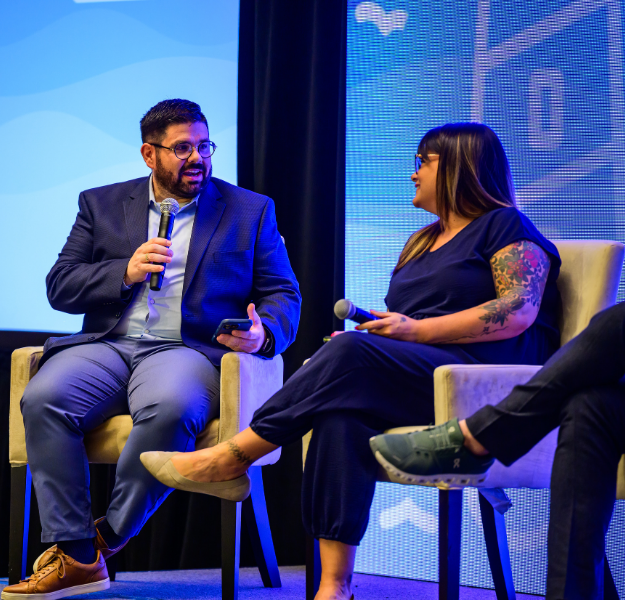
The 2026 Behavioral Health Tech conference, BHT2026, runs September 22 through 24 in Nashville, and four sessions in particular trace this problem from its root cause up to the number every finance team is watching.
At the base of it is a structural question: what is a health plan actually paying for? "Designed to Bill, Not to Heal: What the Evidence Says About Fixing Behavioral Health Cost" argues the real problem is the unit of payment itself. When the therapy session is what gets reimbursed, the system produces sessions for everyone regardless of clinical need, routing the mild-to-moderate majority into care they didn't ask for while higher-acuity patients hit limits that can't hold them. A health plan leader, an employer innovator, and the founder of an accountable care model take on what a better unit of payment looks like, and why unwinding the current one would mean the companies that built it giving up the revenue it generates.
One level up, that structural problem becomes a contracting problem. "The Behavioral Health VBC Gap: Where Contracts Break Down and How to Build Past It" examines why value-based arrangements, from shared savings to full risk, tend to stall before they mature, and what it actually takes to build past the data, incentive, and infrastructure barriers in the way.
Above the contract layer is a visibility problem. A plan can sign the right contract and still not know if it's working. "Quality You Can See: Turning Behavioral Health Data Into Network Insight" names something most plans already suspect: a claim confirms that care happened, but says almost nothing about whether it was good care, delivered by the right provider. The session covers what's changing that, from separating acuity from complexity to using interoperable data to reach high-risk members before a crisis instead of after one.
At the top is the question every finance team eventually asks: does any of this move the number that matters? "How Behavioral Healthcare Can Actually Move the Needle on Medical Cost" brings together health plan and behavioral health leaders to unpack what medical cost analyses are actually showing today, and why some care models bend the cost curve while others just stack spend on top of spend.
Taken together, these sessions are one argument told at four altitudes: get the payment model wrong at the base, and the contract above it stalls. Lose visibility into the network, and no one can tell which spend is actually working. Without that proof, the medical cost case never closes. Solving it at any one layer without the others in view is how good intentions quietly stall out.
Where that failure shows up most starkly is in Medicaid. "Coverage Isn't Access: Reaching Behavioral Health's Hardest-to-Engage Populations" names the gap between a member having coverage on paper and that member actually getting connected to care, and looks at what's working to close it for the populations where the gap tends to be widest.
The health plan presence at BHT2026 reflects how seriously this audience is treating that throughline, and it isn't limited to any one book of business. Some health plans registered so far include:
For solution providers trying to reach this exact audience, that concentration is worth acting on directly. BHT's Hosted Meetings Program was built for this: instead of hoping to run into the right buyer on the exhibit hall floor, sponsors can identify the leaders they want to meet and arrive in Nashville with relevant conversations already scheduled.
If you want to track where behavioral health cost and quality strategy is headed, or simply want to be in the room for it, register for the full three days of programming, the exhibit hall, and the peer roundtable conversations.
If you're a sponsor or solution provider hoping to connect directly with health plan leaders like the ones above, reserve Hosted Meetings, available with qualifying sponsorship packages, to schedule curated, double opt-in meetings with these decision-makers during the event.
And if you're a health plan leader who wants to help shape these conversations rather than just watch them, you can apply here.
However you choose to show up, we can't wait to see you in Nashville.





.png)