.png)
For too long, the behavioral health system has waited for people to hit rock bottom before offering help. Shrenik Jain, Founder and CEO of Marigold Health, knows this firsthand. As someone in recovery himself, and as a former EMT who watched fellow first responders silently struggle with trauma and addiction, he saw how afraid people were that asking for help would end their careers.
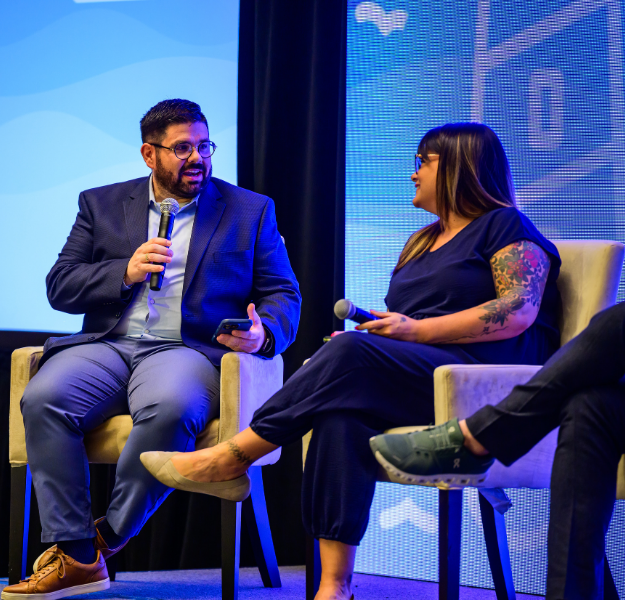
That experience planted the seed for Marigold Health, a platform that harnesses the power of peer support, connecting people with lived experience of recovery to meet individuals where they are, long before they reach crisis. In a recent episode of the Expanding Access podcast, Shrenik Jain sat down with Robert McAlonan, Director of Behavioral Health at VNS Health, to discuss their new partnership and what it means to finally operationalize peer support at scale.
The behavioral health system has a timing problem. Most people who struggle with substance use or mental health conditions don’t seek clinical treatment until they’ve been suffering for years. Jain calls this the “engagement gap,” and it’s one of the central problems Marigold Health was built to solve.
“People really only, for the most part, seek support and clinical treatment for a substance use or mental health condition quite late, after suffering for quite a lot of time on their own.”
What struck Jain as a first responder wasn’t just the suffering. It was the silence. His fellow EMTs and firefighters could recognize they had a problem, but seeking help for a substance use disorder would have been career-ending. The system offered no middle ground between suffering alone and making a public, high-stakes declaration of need.
That gap, he observed, is often filled by communities before clinical care: 12-step programs, AA meetings, Reddit forums, and grassroots recovery networks. People seek these out before they seek a therapist or a treatment center. Marigold’s insight was to formalize and scale what those communities do naturally, and plug it into the healthcare system.
At its core, Marigold Health is a peer support platform. Members access 24/7 support groups through a mobile app, where they can connect with others navigating similar recovery journeys. A workforce of certified peers follows up to provide more individualized coaching when needed.
The model is designed for low friction. You don’t need an appointment. You don’t need to take time off work. You can open the app on the bus and connect with someone who’s been where you are.
“If you’re on the bus to work, you can download our app, connect with a certified peer, connect with other people who are doing their own journeys through distinct but similar experiences. That’s a really powerful tool in activating individuals to think: maybe I can expect more.”
Crucially, peer support at Marigold isn’t a replacement for clinical care. It’s a bridge to it. Jain described how members who spend time in groups or with a peer often become more willing to see a primary care doctor or engage with other services. The peer relationship builds the trust that makes everything else possible.
VNS Health has been a fixture in New York’s healthcare landscape for 130 years. As both a statewide health plan and one of the largest nonprofit home and community-based organizations in the country, it serves more than 60,000 members, many with complex needs. When McAlonan and his team looked at their behavioral health data, one number stood out.
Only a very small percentage of their members were accessing peer support services each year. That was was a critical gap in care, particularly for members navigating the most vulnerable moments of their recovery.
“Members engaged in outpatient services can’t access those providers in the middle of the night or on the weekends. The only place they can go for help is the hospital. Marigold is a support to our members when they need it the most.”
The partnership zeroed in on a specific high-risk window: people transitioning out of inpatient or residential treatment. It’s the period when relapse is most likely, when the scaffolding of structured care has just been removed and the work of building a real support system is still just beginning.
One of the most important reframes in this conversation is how both Jain and McAlonan talk about peer support: as a core component of the behavioral health system.
“Peer support isn’t just a nice-to-have add-on anymore. It’s really a core part of our behavioral health network. It brings lived experience, real connection, and it’s proven to boost engagement and outcomes.”
Jain pointed to a structural irony at the heart of addiction treatment today: the U.S. spends billions on short-term inpatient stays that carry 90%-plus relapse rates, while grassroots peer communities, which are free, intrinsically motivating, and sustained by millions of people in long-term recovery, are barely integrated into the formal care system.
Marigold’s task, as Jain describes it, is to keep what makes peer support authentic and engaging while adding the infrastructure, including outcomes measurement, documentation standards, and supervisor oversight, that makes it legible to health plans and clinical partners.
“We’re entering this new age where we’re recognizing that for behavioral healthcare to truly be effective, it needs to stay with somebody in the community.”
For health plans interested in launching peer support partnerships, the operational questions can feel daunting. How do you credential certified peers, who are not licensed clinicians? How do you handle documentation for text-based interactions? What accreditations apply?
Jain’s advice: it’s more concrete than it looks once you start working through it with a real partner.
Key considerations include how to credential a peer agency as a network provider (credentialing supervisors is one common approach), how to ensure quality and consistency in the peer workforce, and how to handle the full range of modalities. Text-based peer interactions, Jain notes, are indispensable. A large population simply won’t engage with traditional face-to-face formats but will engage via text. Post-COVID policy flexibility has expanded how plans can think about modalities for covered services.
Progress is also happening at the industry level. Marigold now holds a URAC accreditation, and the Joint Commission has developed an accreditation pathway for telehealth providers. The infrastructure is catching up to the need.
Both Jain and McAlonan were direct in their advice to health plans considering value-based behavioral health partnerships: abandon the quick-win mentality.
“The average person, from the first time they raise their hand and actually seek some type of substance use disorder treatment, goes in and out of care, episodically, for eight to nine years before you see that first year of sustained recovery.”
That timeline demands a fundamentally different partnership posture. Plans that want to move the needle on total cost of care for members with substance use disorders need to commit to the long haul, and to measuring success holistically. Jain pointed to broader markers of wellbeing, including sleep, exercise, and physical health engagement, as meaningful early indicators of progress, even before someone achieves abstinence.
McAlonan echoed the need for genuine collaboration, not just vendor relationships.
“The payer and the provider network should work collaboratively with the goal of creating the most seamless member experience possible. With Marigold, they’ve been in the driver’s seat when it comes to design. I’m just trying to support that process and keep it running.”
The long-term framing doesn’t mean there’s nothing to show early. Both leaders pointed to concrete near-term indicators worth tracking.
For VNS Health, the first signal will be growth in peer support utilization, a metric that McAlonan expects to move quickly once Marigold’s platform is active. Beyond that, member satisfaction and retention are important early reads. When people feel connected and supported, they stay engaged with their care.
Jain highlighted a particularly compelling quick win: embedding peer outreach into care transition workflows. When someone is leaving an inpatient program or starting outpatient care, a peer making that initial contact by phone or text meaningfully improves conversion rates compared to standard clinical outreach. NCQA has even updated its quality metric definitions so that a peer touchpoint now counts in the numerator for certain key follow-up measures.
“At a high level, as an industry, it’s about 50/50. It’s still a coin flip whether someone leaving inpatient care gets a follow-up. If you can actually show we’re embedding this within those workflows at those key care transitions, that’s a pretty quick win.”
One of the most nuanced points in the conversation was about the relationship between digital peer support and existing community-based providers, and why it’s a partnership, not a competition.
McAlonan framed payers as the connective tissue: “Payers can really drive collaboration by making it easier for digital and community-based providers to work together. We need to be the liaison to see that those connections happen and that they’re successful.”
Jain described Marigold’s platform as a resource for peer agencies in the existing network too, offering specialized supervision, structured referral pathways, and visibility into what’s actually happening with members beyond claims data.
“Claims don’t tell the whole story. But if you can layer the claims on top of the information you’re learning by directly engaging the members, that’s when you really get that more complete picture, and that’s when you can get a lot more creative in years two and three.”
Both leaders were asked the same question to close: what do they hope people will say about the VNS Health and Marigold partnership in two years?
For McAlonan, the hope is that the partnership becomes a model for other payers and other states, proof that this kind of integration is replicable and impactful.
For Jain, the ambition runs deeper: demonstrating that peer support doesn’t just reduce acute behavioral health utilization, but that it drives measurable improvement across the chronic medical conditions that determine someone’s overall health trajectory.
“We all know from personal experience that peer support can empower folks to take control of their broader health. We’re really just showing that a plan and an organization like Marigold can partner to take that to the next level of scale.”
In a healthcare system that has long treated behavioral health as an afterthought, that vision of peer support as a genuine driver of whole-person health might be the most ambitious quick win of all.
To learn more about Marigold Health, visit marigoldhealth.com. To learn more about VNS Health, visit vnshealth.org. For more episodes of the Expanding Access podcast, visit behavioralhealthtech.com.




.png)