.png)
There is a version of Medicaid that lives in the public imagination: people out of work, dependent, waiting. Cheryl J. Roberts has spent more than 30 years dismantling that image, one policy, one program, one Saturday morning clinic at a time.
Roberts, the former Director of the Virginia Department of Medical Assistance Services, grew up in the St. Mary's projects in the South Bronx. She didn't know her circumstances were hard because everyone she knew lived the same way. What she did know was that she wanted to leave. She left. She went to a specialty high school, then City College, then law school at night while working full-time at an insurance company. That insurance job taught her IT systems and project management, skills she'd later describe as central to her most consequential work. Eventually, a chance encounter at a church with Virginia's Secretary of State redirected her entire career. She took a step down in salary to enter public service and never looked back.
What Roberts found in Medicaid surprised her. She describes it as a diamond: multifaceted, constantly revealing new dimensions, touching everything from provider recruitment to pharmacy to maternal health to behavioral health. But what kept her was simpler. As a young Medicaid employee tasked with recruiting physicians to accept Medicaid patients, she'd walk into provider offices and hear the same thing: I don't take Medicaid. Each time, the same memory surfaced, sitting in a clinic as a child while her mother went shopping and came back, because they both knew she wouldn't be seen for hours.
That memory became her compass.
The youth mental health innovators in this field need to understand something about the population they're designing for, because Roberts made this point clearly: the person you pass in a grocery store checkout line, the behavioral health worker handing your child a daily schedule at a youth program, the childcare worker picking them up after school, these are likely Medicaid members. One in three people in Virginia were covered under Medicaid when Roberts was directing the program.
The design implications follow directly. If you're building solutions that require parents to leave work during business hours, you are designing for a version of your user that doesn't exist. This is something Roberts learned viscerally when she launched a Saturday prenatal clinic in Petersburg, Virginia, an area with some of the worst maternal health outcomes in the state. One OB-GYN, Dr. Daphne Bazile, agreed to open on Saturday mornings. The hospital system was skeptical. The governor, when he heard about it, was not. That political buy-in changed the conversation.
But the story Roberts tells about Petersburg isn't the governor's endorsement. It's the young woman who came in alone, not knowing she was pregnant and walked out holding an ultrasound, telling Roberts: I'm going to have a baby. It's the husband who said he'd been trying to get his wife to a prenatal appointment for months but they only had one car and he needed it for work. Saturday mornings were the only window that worked.
Roberts used that waiting room as an informal focus group, handing out health plan comparison charts and watching people struggle to parse them, then immediately directing her team to redesign the materials. She was using the very people the system was supposed to serve to make it better. The program eventually drew patients driving hours from Northern Virginia because it was the only Saturday prenatal option they could find. Petersburg's maternal health numbers moved. The model spread to Inova and Sentara. Those hospital systems' own employees were among the first to use the extended hours.
The lesson Roberts draws from this is not about scale; she's clear on that. Start small. Prove it. When she first began imagining a requirement that all hospitals offer extended OB-GYN hours, she knew a mandate would be dead on arrival. A single willing physician with a Saturday morning clinic was something she could actually get done.
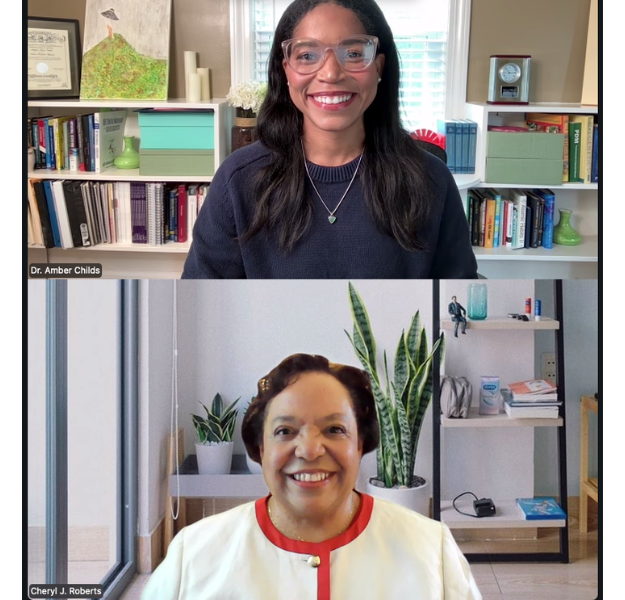
There is another case study from her tenure, involving foster children aging into college, that offers a different and equally instructive look at how innovation inside a bureaucracy actually happens. She shares it in detail in the full recording of Claims to Fame, the new insider series from Behavioral Health Tech and BHT Impact where Roberts joined host Dr. Amber Childs for an unrehearsed, wide-ranging conversation about what it takes to build change from inside public systems.
The recording also covers Roberts's approach to making the financial case for programs with soft outcomes, the role of psychotropic prescribing trends among foster youth, and her specific counsel to both emerging innovators and senior leaders about sponsorship, mission, and what she calls "the noise" that can make the work feel impossible.
What stays with you after listening is not any single program but the through-line: a person who grew up needing the safety net, who spent thirty years inside it, who kept returning to the faces of the people the system was supposed to serve whenever the data felt abstract.
Watch the full on-demand recording to hear the complete conversation.





.png)